
What to Do After a Car Accident in Alberta
Step-by-step, written to be followed with shaking hands.
What to Do After a Car Accident in Alberta
The minutes after a collision are loud, fast, and confusing — and the decisions you make in them affect your claim for months. Here's the complete sequence for Alberta drivers, from the scene to the repaired vehicle, written so you can follow it with shaking hands.
At the Scene
Stop. Always. Leaving a collision scene is a criminal offence — even a minor scrape.
Check for injuries — yours, passengers, the other vehicle. Any injury: call 911. Don't move anyone unless there's immediate danger.
Get out of traffic — if vehicles drive and it's safe, move them out of live lanes; hazards on. Alberta law allows moving vehicles in minor collisions.
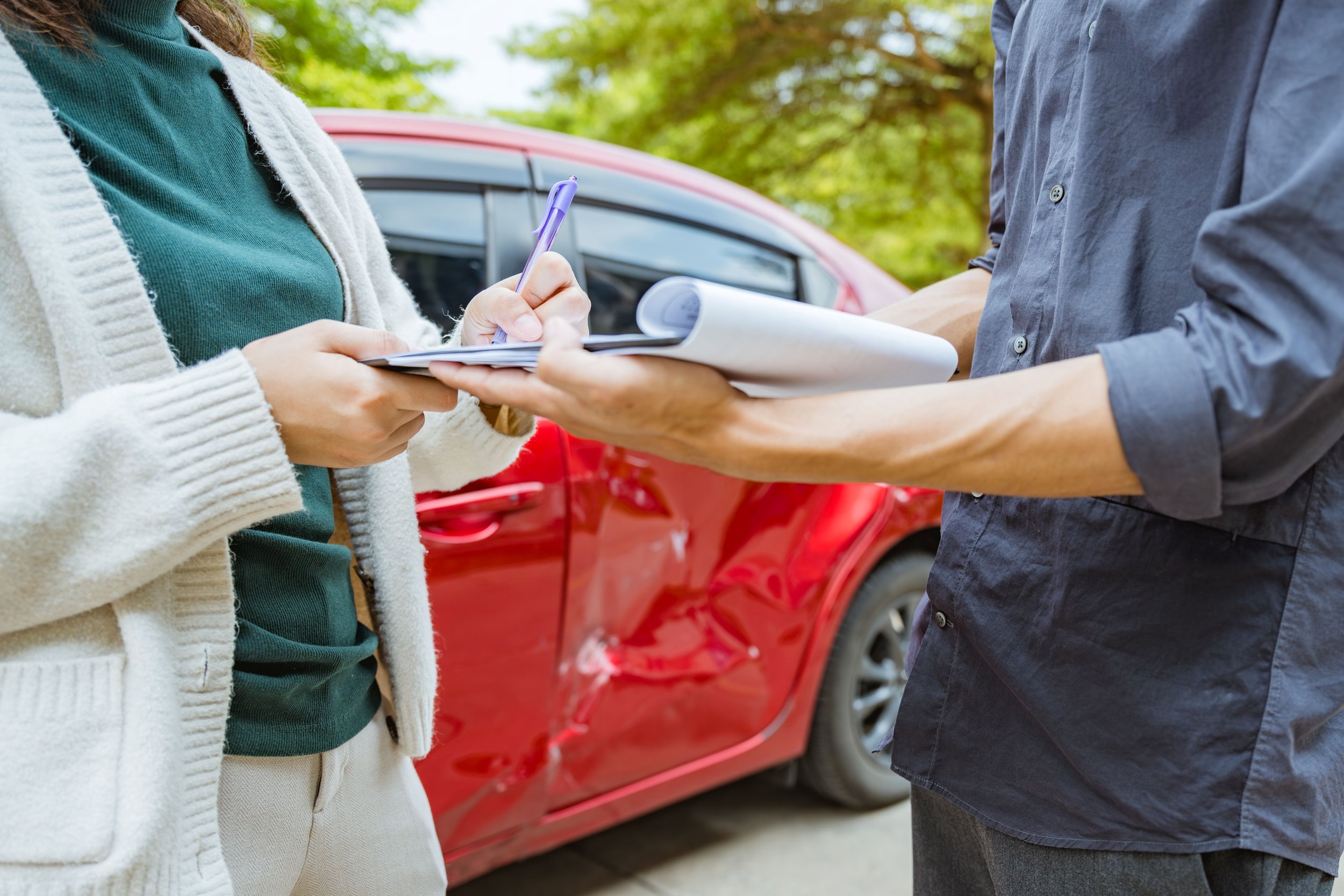
Exchange information — names, phone numbers, driver's licences, plates, insurance company and policy numbers. Photograph their documents rather than transcribing.
Photograph everything — both vehicles from multiple angles, positions on the road, licence plates, the intersection, skid marks, debris.
Get witnesses — names and numbers of anyone who saw it. Thirty seconds now can decide fault later.
What Not to Say
Don't apologize and don't assign blame — to the other driver, to witnesses, or in writing. 'Sorry' feels polite and reads as an admission. Stick to facts and information exchange; fault determination belongs to police and insurers, who have rules for it and adrenaline-free desks to apply them from.
The $5,000 Rule: When Police Must Be Involved
In Alberta, you must report a collision to police if combined damage looks like it exceeds $5,000, or if anyone is injured, or if a driver has no insurance, appears impaired, or leaves the scene. In Edmonton that means a collision reporting centre for non-injury crashes — go within 24 hours and bring your photos and exchanged information. Under $5,000 with no injuries and cooperative drivers? No police report required, though your insurer still needs the facts. When in doubt, report: $5,000 of modern bumper and sensor damage arrives faster than most people think.
Starting Your Claim
Call your insurer or broker — soon, even if you're unsure about claiming. Late reporting can complicate coverage.
Choose your repair shop — your right in Alberta, regardless of any 'preferred shop' suggestion.
Get the estimate — bring the vehicle (or photos) to us; we document it the way adjusters need.
Let the shop run the claim — from here we handle the adjuster, approvals, supplements, and direct billing. You pay your deductible at pickup.
After-Accident FAQs
The other driver wants to settle privately. Should I?
Be careful. Private settlement might make sense for a genuinely trivial scrape, but hidden damage is the norm, not the exception — a $500 handshake can precede a $4,000 repair. If you consider it, get the damage professionally estimated FIRST, get the agreement in writing, and know that skipping your insurer means no coverage if injuries surface later.
My car was towed. Now what?
You can have it towed to the shop of your choice — towing to a compound or an insurer's preferred shop doesn't lock you in. Call us at 780-469-6032 and we'll arrange the tow to our shop and start the estimate.
Do I need a police file number to claim?
For reportable collisions ($5,000+, injury, hit and run), yes — your insurer will ask for it. For minor reported-to-no-one fender benders, your insurer opens the claim from your account of the facts and the other driver's information.